
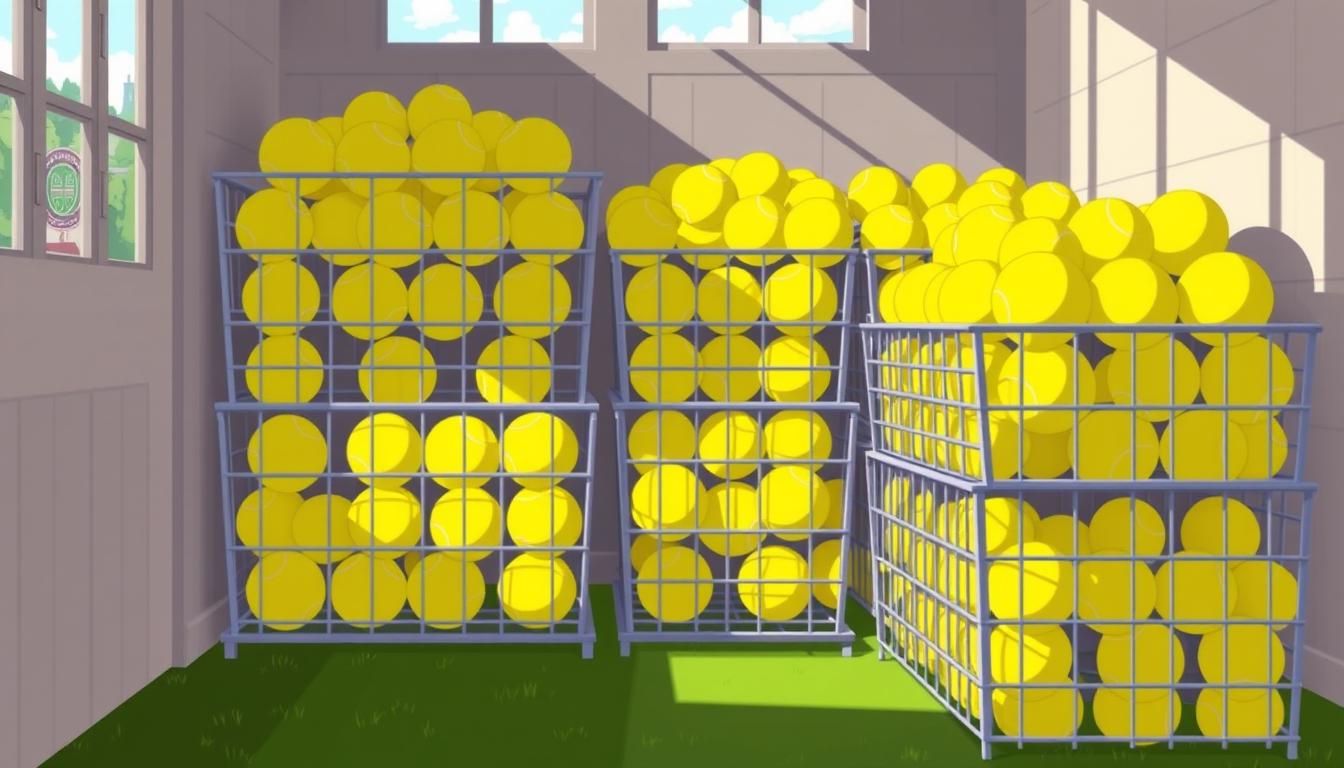
The Wimbledon tennis tournament is famous for its prestige and tradition. It’s known for its attention to detail. But, not many notice the huge number of tennis balls used during the event. It’s reported that around 54,250 tennis balls are used each year.
These balls come from the Dunlop Slazenger Group. They follow strict rules. Players can check up to four balls before serving to make sure they’re smooth and firm. This is important because even small differences can affect how the ball moves.
The balls are changed after the first seven games of a match. Then, they’re changed every nine games after that. To keep the matches going, 48 tins of balls are brought onto each court every day.

Key Takeaways
- Approximately 54,250 tennis balls are used throughout the Wimbledon tournament each year.
- Players are allowed to check a maximum of four balls before serving to assess their smoothness and firmness.
- Balls are changed after the first seven games of a match and then every nine games thereafter.
- 48 tins of balls are taken onto each court daily to ensure a continuous supply for the matches.
- The Dunlop Slazenger Group supplies the tennis balls used at Wimbledon.
History of Tennis Balls at Wimbledon
The tennis balls at Wimbledon have changed a lot over the years. They were first made from rubber with flannel on top. Later, they got better with pressurisation and gas filling.
In 1972, Wimbledon switched to yellow felt-covered balls. This was to make the balls easier to see on TV. The bright yellow looked great against the green courts.
Evolution of Tennis Balls from White to Yellow
Before 1972, Wimbledon used white balls. But in 1986, they changed to yellow balls. This made Wimbledon look different and more exciting.
The Slazenger Wimbledon Official Tennis Ball is used at The Championships. These balls are checked carefully to meet Wimbledon’s high standards.
Over time, tennis has changed a lot. New rules were introduced in 1989 and 2002. These changes helped the game grow and adapt.
| Year | Event | Impact |
|---|---|---|
| 1972 | ITF mandates yellow tennis balls | Improved visibility for television viewers |
| 1986 | Wimbledon adopts yellow tennis balls | Aligns with ITF regulations and tournament traditions |
| 1989 | Introduction of high altitude tennis balls | Adapts to changing environmental conditions |
| 2002 | Differentiation between Type 1 and Type 3 tennis balls | Refines ball properties for different playing conditions |
The tennis balls at Wimbledon show the tournament’s love for innovation and tradition. From the first white rubber balls to today’s yellow ones, they are key to Wimbledon’s magic.
Strict Wimbledon Ball Regulations
At Wimbledon, the tennis balls are very carefully chosen. Players can check up to four balls before a match. They make sure the balls are smooth and firm.
If a ball doesn’t meet these standards, it’s replaced right away. This keeps the game fair and consistent for everyone.
Criteria for Ball Selection and Replacement
During a match, the balls are changed after seven games. Then, every nine games after that. This ensures the balls perform well throughout the tournament.
The Wimbledon team works hard to keep standards high. Their partnership with Slazenger, the official ball supplier, is key to this effort.
| Wimbledon Ball Regulations | Key Facts |
|---|---|
| Ball Inspection | Players can check a maximum of 4 balls before the match |
| Ball Replacement | Balls are changed after the first 7 games, then every 9 games |
| Ball Supply | 48 tins of balls are brought to each court daily |
| Total Balls Used | Approximately 54,250 balls are used throughout the tournament |
These strict Wimbledon ball regulations and careful tennis ball selection criteria ensure a fair game. The tournament ball replacement process is also very detailed. This makes the Grand Slam event logistics run smoothly for all players.
How Many Tennis Balls Are Used at Wimbledon?
The Wimbledon tennis championship is known for its attention to detail. This includes the use of tennis balls. Each year, 54,250 tennis balls are used, showing the tournament’s size and need for quality balls.
To keep the game exciting, balls are replaced often. The organisers make sure each ball is perfect. They use the Slazenger Wimbledon Official Tennis Ball for the tournament.
| Statistic | Number |
|---|---|
| Total tennis balls used during the tournament | 54,250 |
| Tennis ball tins taken onto each court daily | 48 |
| Maximum number of balls players can check before serving | 4 |
| When tennis balls are changed during a match | After the first 7 games, and then every 9 games thereafter |
| Price of used Wimbledon tennis balls sold to fans | £2.50 for a tin of 3 balls, or £5 for a tin of 6 balls |
The large number of tennis balls used at Wimbledon shows the importance of sports event logistics. It also highlights the careful management of tennis equipment consumption. Wimbledon’s organisers are committed to sustainability. They donate used tennis balls to charity, reducing waste and promoting recycling.
Storage and Preparation of Balls
To keep the tennis balls in top shape for Wimbledon, they are stored in cool containers at 68°F (20°C). This keeps them firm and smooth for the matches. Before play, the balls are checked and any not up to standard are swapped out. This careful prep is key to giving players the best gear for the tournament.
Refrigerated Containers Maintain Optimal Conditions
The tennis balls for Wimbledon are kept in special cool containers. This keeps them just right for play. It’s vital for the top-notch tennis fans see during the tournament.
- Every year, Wimbledon uses about 54,000 tennis balls.
- The balls travel an amazing 50,570 miles during the tournament.
- The balls come from the Philippines, a journey of 6,660 miles, after passing through 11 countries and 4 continents.
This focus on ball storage and prep shows Wimbledon’s dedication to top-notch play. It’s great for the athletes and fans.

“The attention to detail in the storage and handling of the tennis balls used at Wimbledon is truly remarkable. It’s a testament to the tournament’s commitment to excellence and ensuring the players have the best equipment possible.”
Ball Boys and Girls: Unsung Heroes
At Wimbledon, the ball boys and girls (BBGs) are the real heroes. They keep the matches running smoothly. Over 250 BBGs are chosen each year from over 1,000 applicants. They go through a tough five-month training.
The selection is tough. They need to be fit, disciplined, and good at working together. They learn how to handle different game situations. The training ends with a week on the grass courts, getting ready for Wimbledon.
During Wimbledon, BBGs work hard. They have one hour on the court, then one hour off. This keeps them sharp all day. They help with over 700 games in the fortnight.
The tradition of using Wimbledon ball boys and girls started in the 1920s and 1930s. In 1980, boys and girls worked together. Now, kids from 30 schools in southwest London and Surrey can join. It’s a chance to be part of Wimbledon.
“The highlight for many BBGs is being part of the Guard of Honour at events like the Wimbledon final. It’s a moment of pride and excitement, despite the long hours and hard work.”
While many don’t notice the tournament volunteers and sports event logistics, the BBGs are key. They work hard to make sure everyone can enjoy the games. Their dedication is truly impressive.
Longest Match and Record-Breaking Serves
Wimbledon has seen some amazing matches and record-breaking serves. In 2010, a match between John Isner (US) and Nicolas Mahut lasted 11 hours and 5 minutes. It’s the Longest Wimbledon match ever.
This marathon match needed 123 tennis balls. It even broke the scoreboard, which was only meant to show up to 47-47.
Epic Encounters and Powerful Shots
The fastest men’s serve at Wimbledon was by Taylor Dent, hitting 147mph. Venus Williams holds the women’s record with a 125mph serve. These tennis serve speed records show the players’ incredible power and endurance.
| Player | Serve Speed (mph) |
|---|---|
| Taylor Dent (Men’s) | 147 |
| Venus Williams (Women’s) | 125 |
After the 2010 record, Wimbledon changed its rules. Now, a tiebreak is played at 12–12 in the final set. In 2022, they tried a 10-point tiebreak at 6–6 in the final set of all Grand Slam matches. These changes aim to manage memorable Wimbledon moments and sports performance statistics.

“The match consisted of a total of 183 games, making it the longest match in tennis history in terms of both duration and number of games.”
Environmental Impact and Sustainability Efforts
Wimbledon, the world’s most famous tennis tournament, is now focusing on being green. It aims to cut down its waste and use sustainable practices. With 500,000 fans coming in 2024, the event creates a lot of trash, over 500 tonnes a year.
To tackle this, Wimbledon is working hard to be more eco-friendly. It wants to use less energy and follow a circular economy. This means making the most of resources and reducing waste.
One big step is recycling tennis balls. Used balls are collected and sold to fans or given to charities. Wimbledon has even donated balls to help wildlife, showing its dedication to the planet.
But Wimbledon’s green efforts don’t stop with tennis balls. It’s also cutting down on waste and emissions. For example, it recycles a lot of plastic cups and bottles. Plus, it gives away food to help those in need, making sure no food goes to waste.
Wimbledon is also looking at how it uses energy and transport. It wants to be carbon neutral by 2030. It’s encouraging fans to use public transport and exploring new energy sources to reduce its impact.
“Wimbledon’s commitment to sustainability is a powerful example of how major sporting events can minimise their carbon footprint and contribute to a more circular economy. Their efforts to recycle, repurpose, and reduce waste set a positive precedent for the sports industry as a whole.”
Wimbledon’s green efforts are a beacon for other sports events. By taking care of the environment, Wimbledon is not just reducing its own impact. It’s also inspiring others to be more sustainable, leading to a greener future for sports.
Purchasing Used Wimbledon Balls
For tennis lovers and Wimbledon fans, there’s a special chance to own a piece of history. The Wimbledon Foundation Kiosk at Court 14 lets you buy used tennis balls from the Championships. These balls have been played with during the tournament.
These Wimbledon tennis balls are sold in tins of three for £3 or six for £6.10. All money goes to the Wimbledon Foundation’s charitable causes. It’s a great way for fans and collectors to own a piece of Wimbledon history while helping a good cause.
Every year, Wimbledon uses over 54,000 Slazenger tennis balls. Buying these used balls is a hit with visitors. The balls are changed often to keep play fair, giving fans a chance to buy buying used Wimbledon tennis balls, tennis memorabilia, and Wimbledon merchandise for sports fans collectibles.
Whether you love tennis or just want a piece of history, the Wimbledon Used Ball Kiosk is a great choice. It’s a memorable and affordable way to own a piece of the Championships. This unique chance to own a used Wimbledon tennis ball is perfect for any sports fans collectibles looking to add something special to their collection.
“Owning a used Wimbledon tennis ball is like holding a piece of tennis history in your hands. It’s a truly special memento for any fan of the game.”
Interesting Facts About Wimbledon Tennis Balls
Wimbledon is famous for its long history and traditions. The tennis balls used there are also quite interesting. They have a rich history and fun facts that make them special.
Did you know Wimbledon balls were once white? They changed to yellow to look better on TV. This change made the tournament even more iconic.
Rufus, a Harris hawk, helps keep Wimbledon’s Centre Court free from pigeons. He has over 10,000 Twitter followers. This shows Wimbledon’s unique way to keep the court perfect.
The longest Wimbledon match was between John Isner and Nicolas Mahut. It lasted 11 hours and 5 minutes. This match set a record with its long score.
Wimbledon has seen some fast serves. Taylor Dent hit the fastest men’s serve at 147mph. Venus Williams holds the women’s record at 125mph.
These Wimbledon tennis ball facts add to the tournament’s charm. They make Wimbledon a fascinating event for everyone.
Ball Selection and Performance
At Wimbledon, the tennis balls are checked carefully to meet the tournament’s high standards. The official ball is the Slazenger Wimbledon Tennis Ball, known for its Wimbledon logo and soft yellow felt. Players can check up to four balls before the match starts. They look for smoothness and firmness, as these affect how the ball bounces and feels on the racket.
This detailed ball selection and regular replacement are key to Wimbledon’s quality. Balls are swapped out after every seven to nine games. This keeps them in top condition, ensuring a consistent bounce and flight on the grass courts.
Rigorous Quality Control Measures
The Slazenger Wimbledon Tennis Balls are checked closely to meet Wimbledon’s high standards for sports equipment performance. Players can assess the smoothness and firmness of the balls before a match. Any issues can affect how the ball interacts with the racket and the overall Wimbledon tennis ball quality.
| Quality Control Criteria | Importance |
|---|---|
| Smoothness | Ensures consistent bounce and trajectory |
| Firmness | Maintains optimal contact with the racket |
| Replacement Schedule | Preserves ball condition throughout the match |
This strict quality control process for the Wimbledon tennis balls is vital. It ensures the Grand Slam tournament maintains its high standards. It also gives players a fair and consistent game.
Conclusion
Wimbledon is known for its top-quality tennis balls and strict replacement rules. This makes the tournament stand out. The use of 54,250 balls a year shows Wimbledon’s dedication to excellence.
The change from white to yellow balls and record-breaking serves add to the excitement. Fans also get a chance to own a piece of history. This makes Wimbledon unforgettable for everyone involved.
The selection and preparation of tennis balls at Wimbledon are key to its success. The tournament uses the best equipment and supports sustainability. This shows Wimbledon’s commitment to its traditions and values.
Wimbledon’s tennis balls are a symbol of the tournament’s legacy and pursuit of perfection. The balls are used in huge numbers and offer fans a unique chance to own a piece of history. This makes Wimbledon a global icon of tennis excellence.
FAQ
How many tennis balls are used at the Wimbledon tournament each year?
About 54,250 tennis balls are used at Wimbledon each year.
What type of tennis balls are used at Wimbledon?
Wimbledon uses the Slazenger Wimbledon Official Tennis Ball. It has the tournament’s logo and a yellow felt.
How are the tennis balls at Wimbledon regulated and maintained?
Wimbledon has strict rules for its tennis balls. Players can check four balls before serving. The balls are changed after the first seven games and every nine games after that.
What is the process for storing and preparing the tennis balls at Wimbledon?
Wimbledon stores its tennis balls in cool containers at 68°F (20°C). Before use, they are inspected and any not up to standard are replaced.
Who are the unsung heroes responsible for maintaining the tennis balls during Wimbledon matches?
Wimbledon’s ball boys and girls are key. They quickly replace the balls, ensuring play continues without pause.
What are some of the notable records and events related to the tennis balls used at Wimbledon?
Wimbledon has seen epic matches and records. The 2010 match between John Isner and Nicolas Mahut lasted 11 hours and 5 minutes, using 123 balls. The fastest serve by a man was by Taylor Dent at 147mph, and Venus Williams had the fastest serve by a woman at 125mph.
How does Wimbledon address the environmental impact of the tennis balls used in the tournament?
Wimbledon aims to reduce its environmental impact. Used balls are collected and either sold to fans or donated to charity. They are even used to house harvest mice.
Can fans purchase used tennis balls from the Wimbledon tournament?
Yes, fans can buy used tennis balls at the Wimbledon Foundation Kiosk. Proceeds help charitable causes supported by the Wimbledon Foundation.

Leave a Reply